Phone icon+381 21 518 887

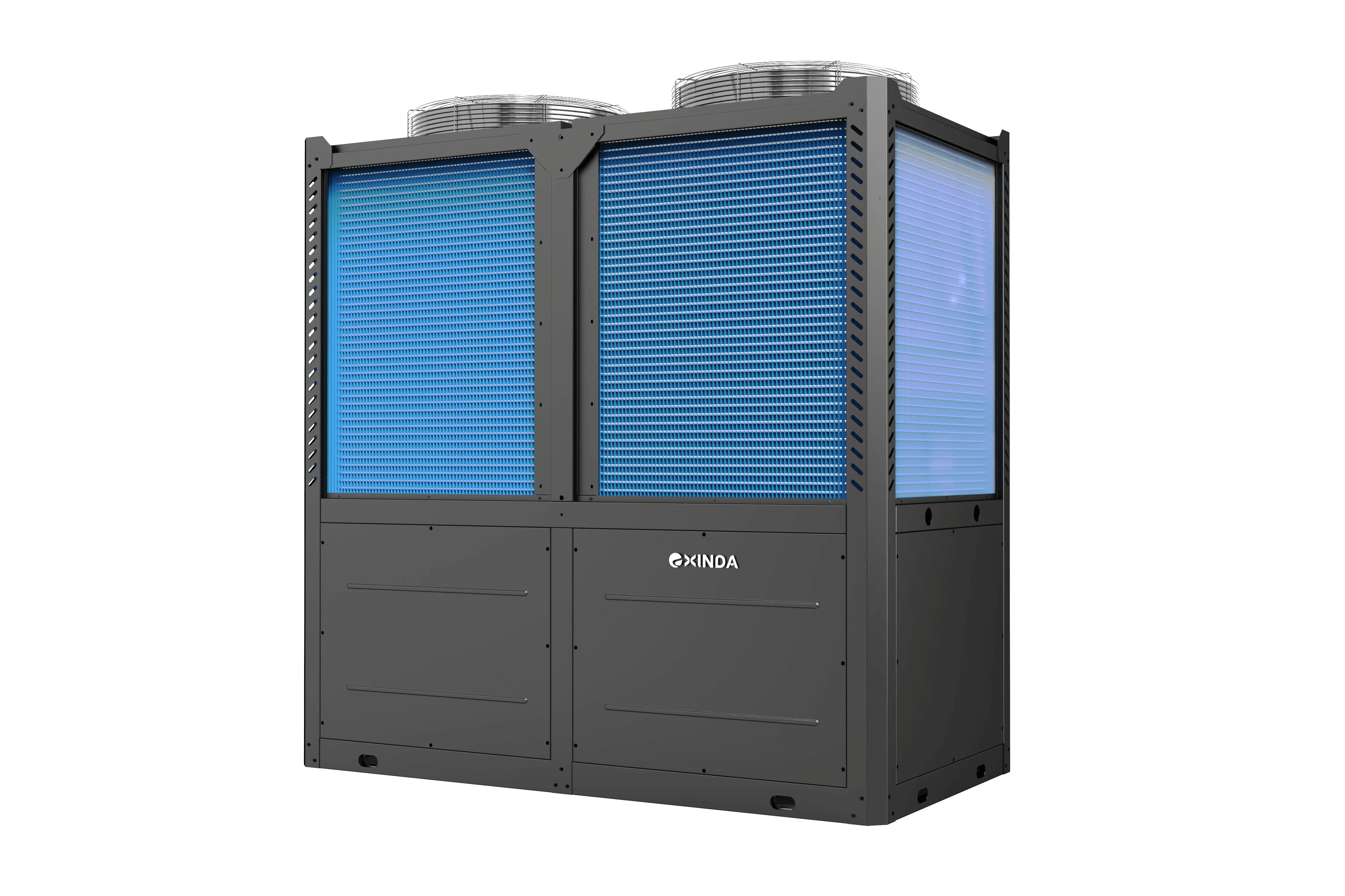
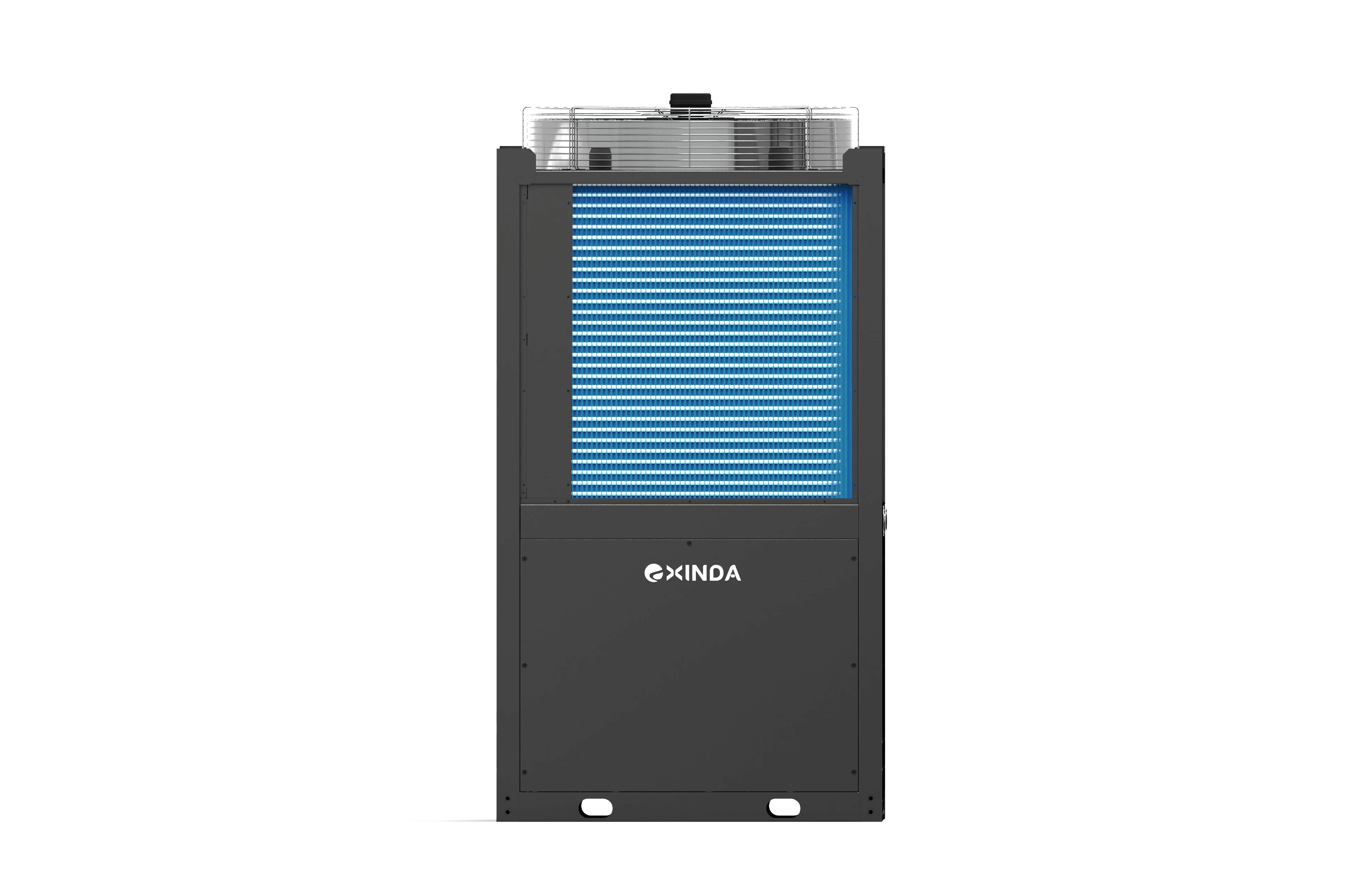
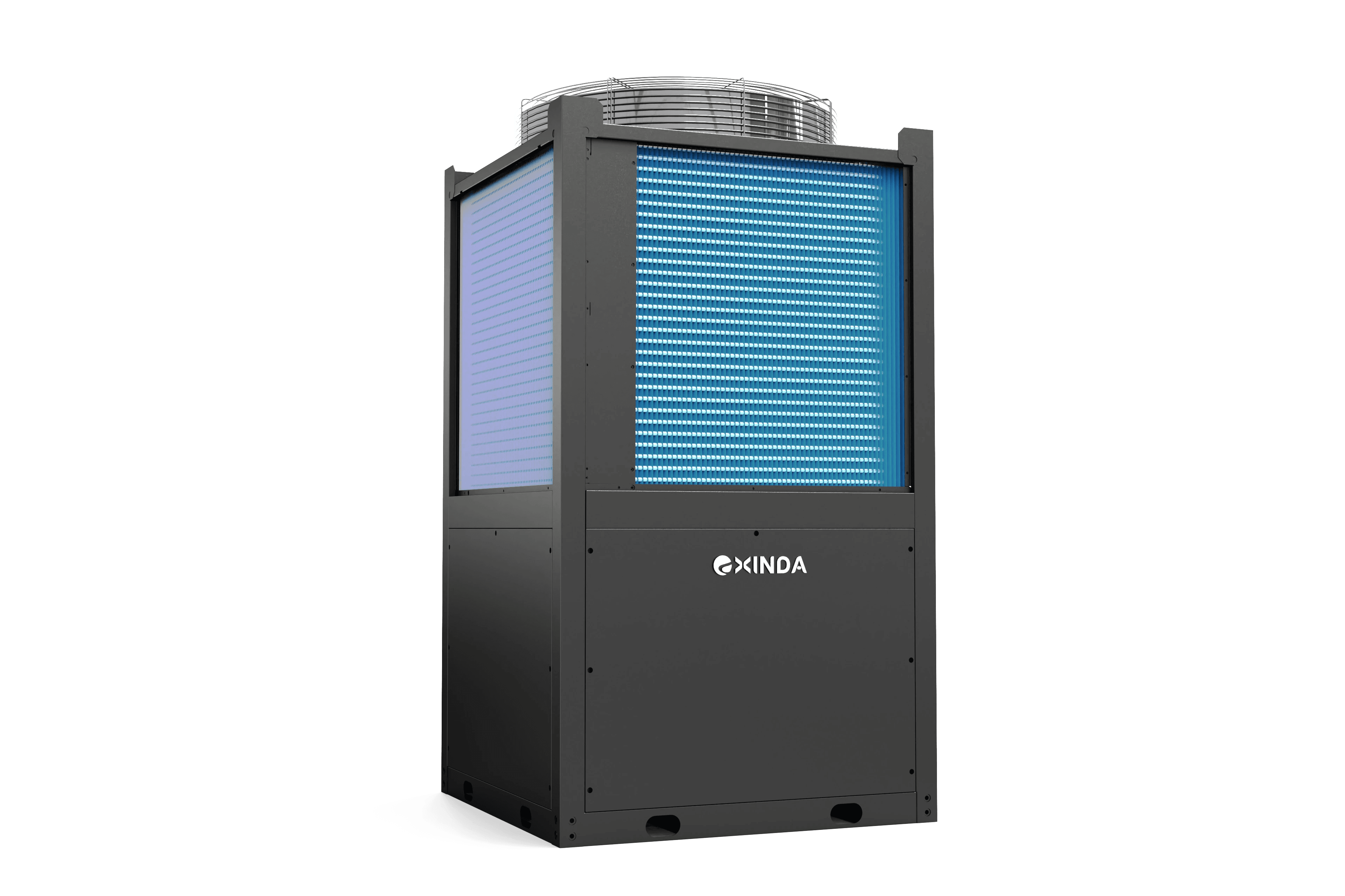
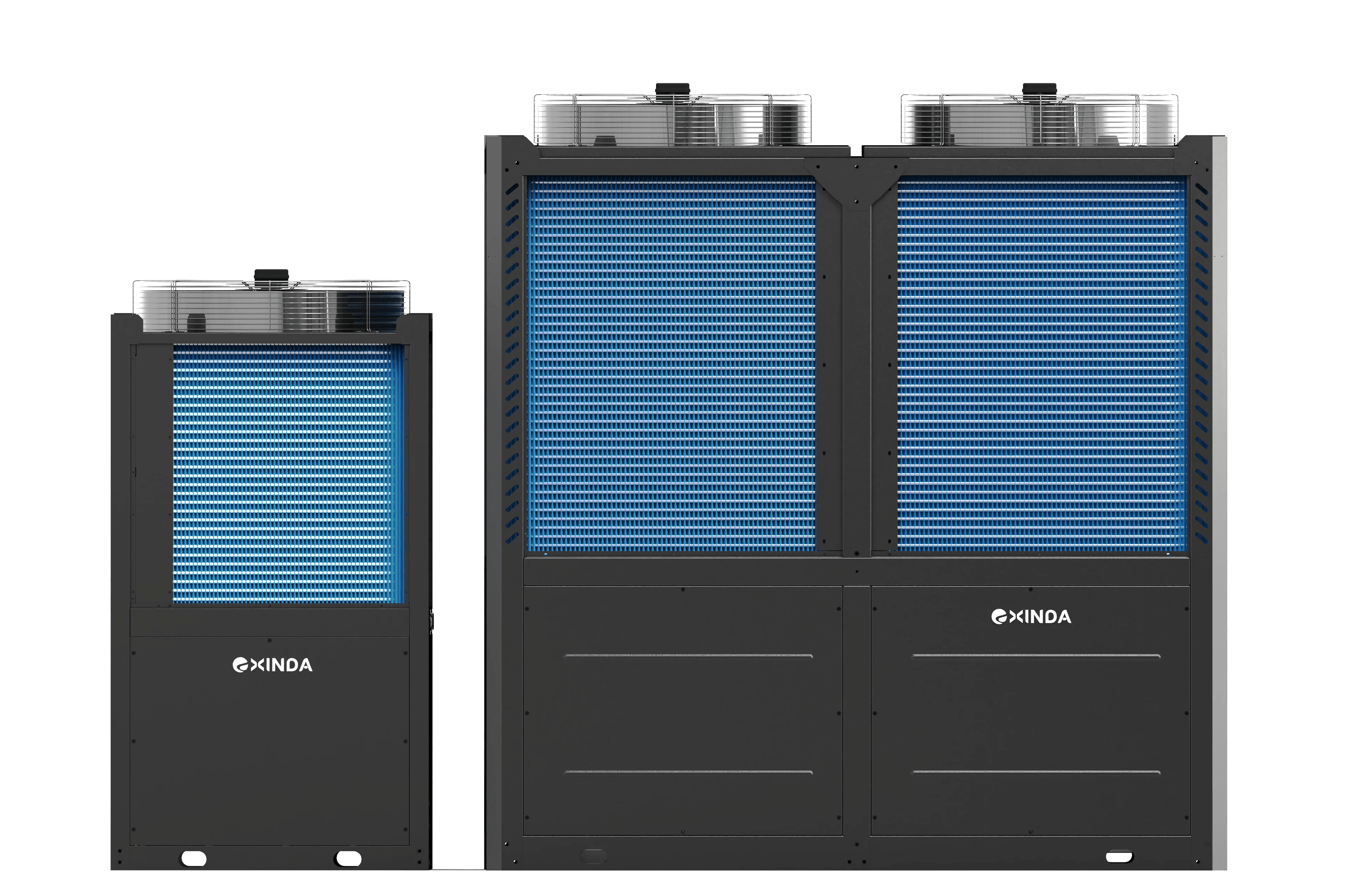
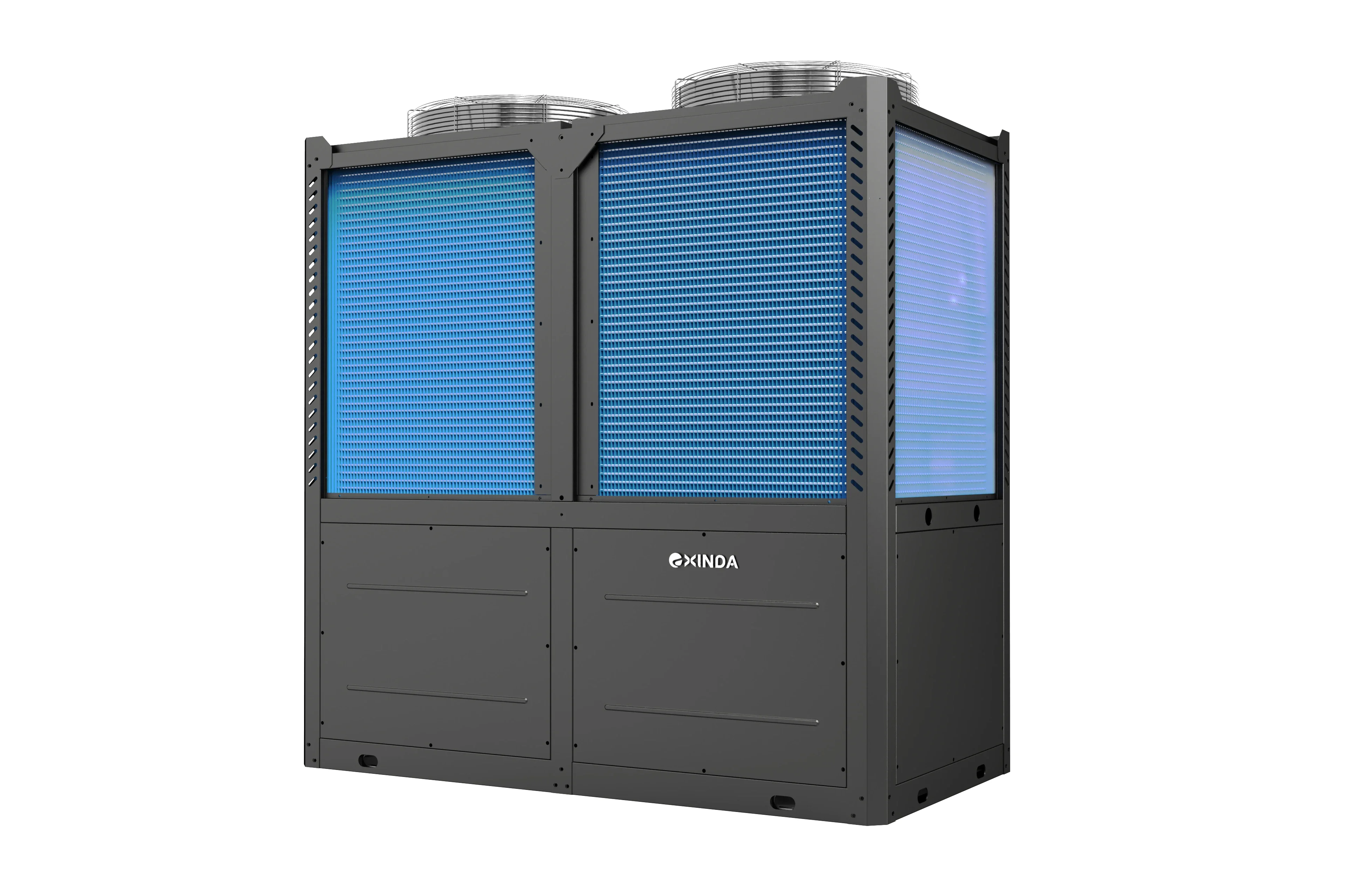
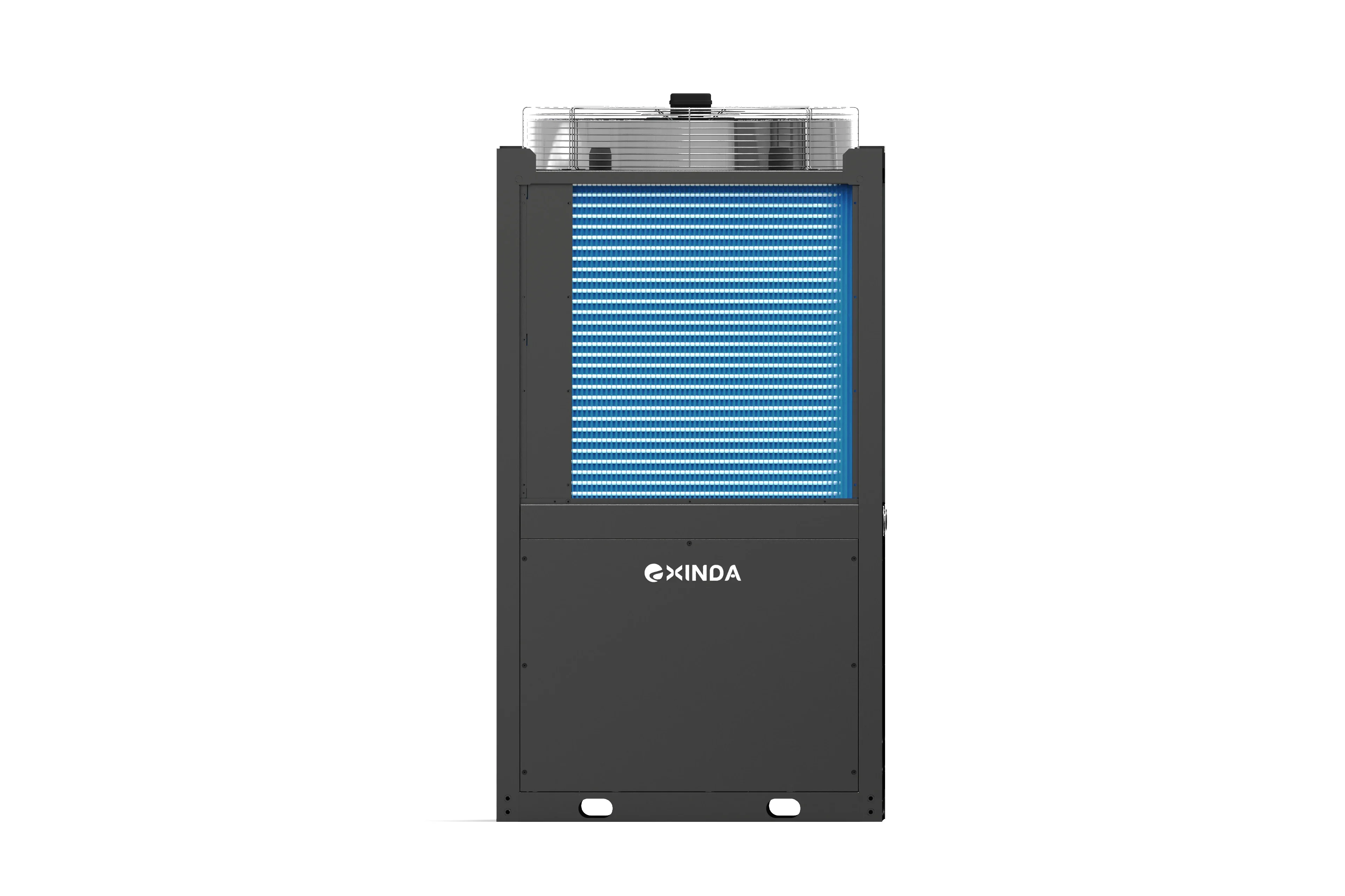
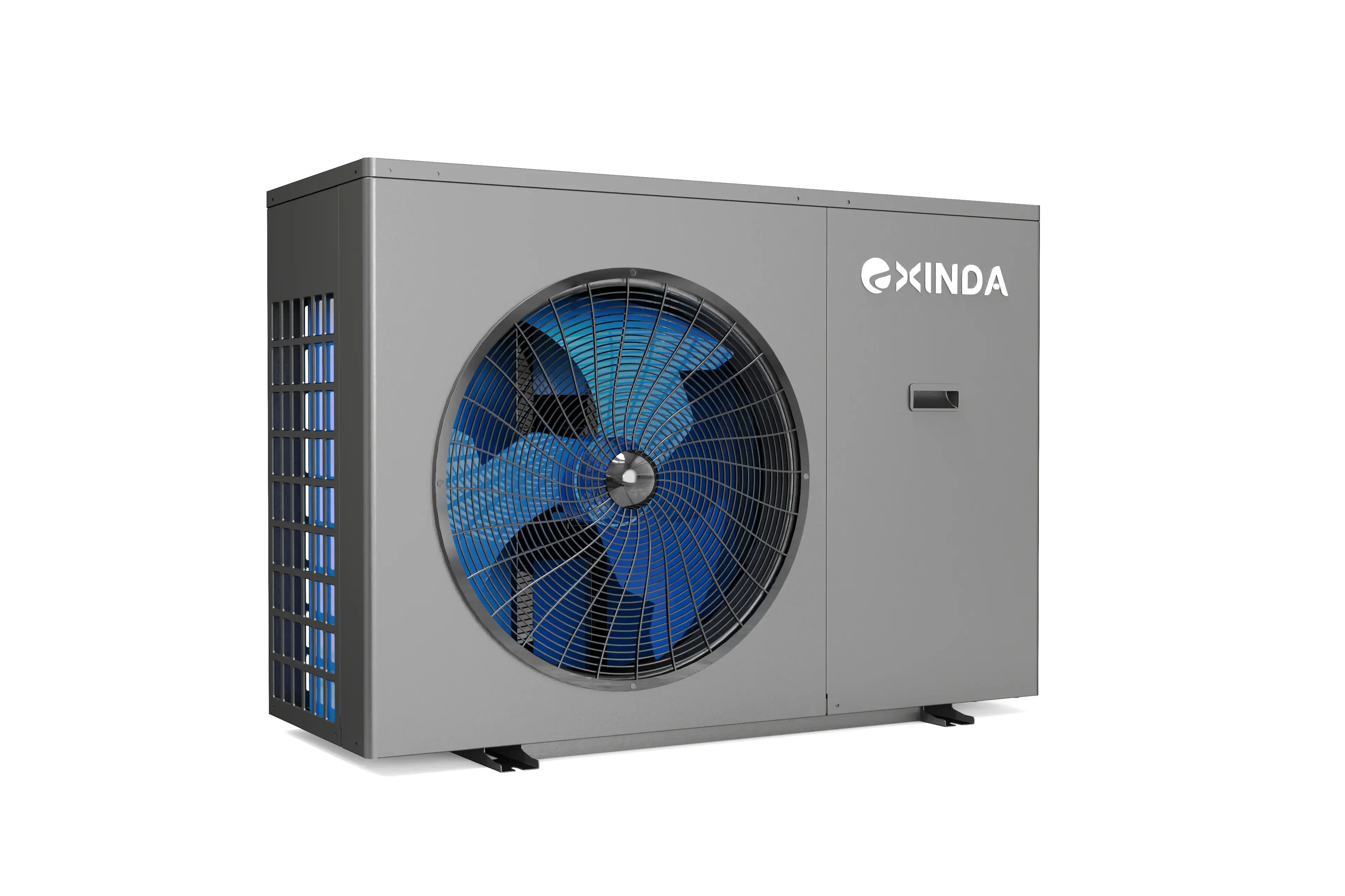
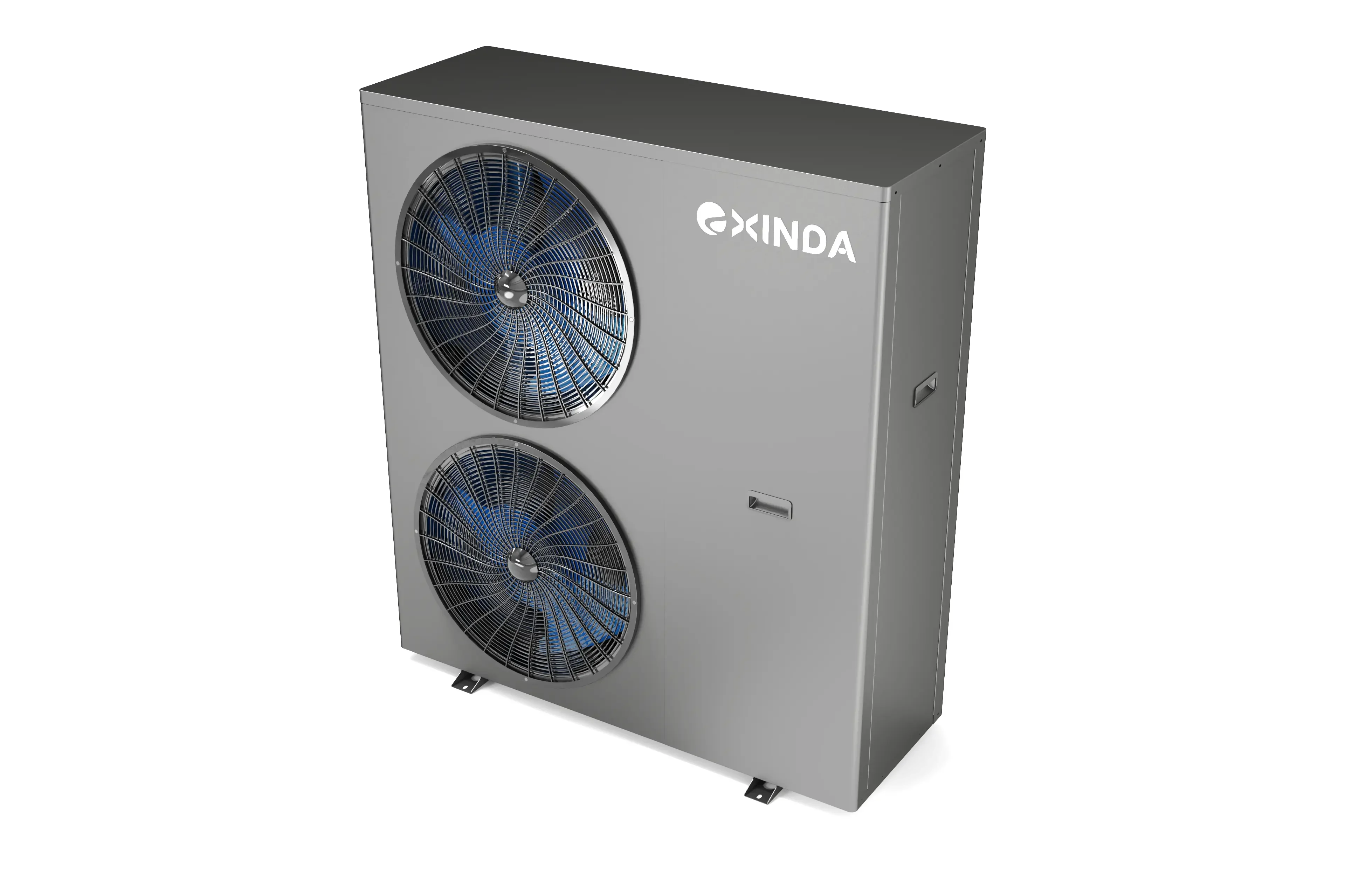
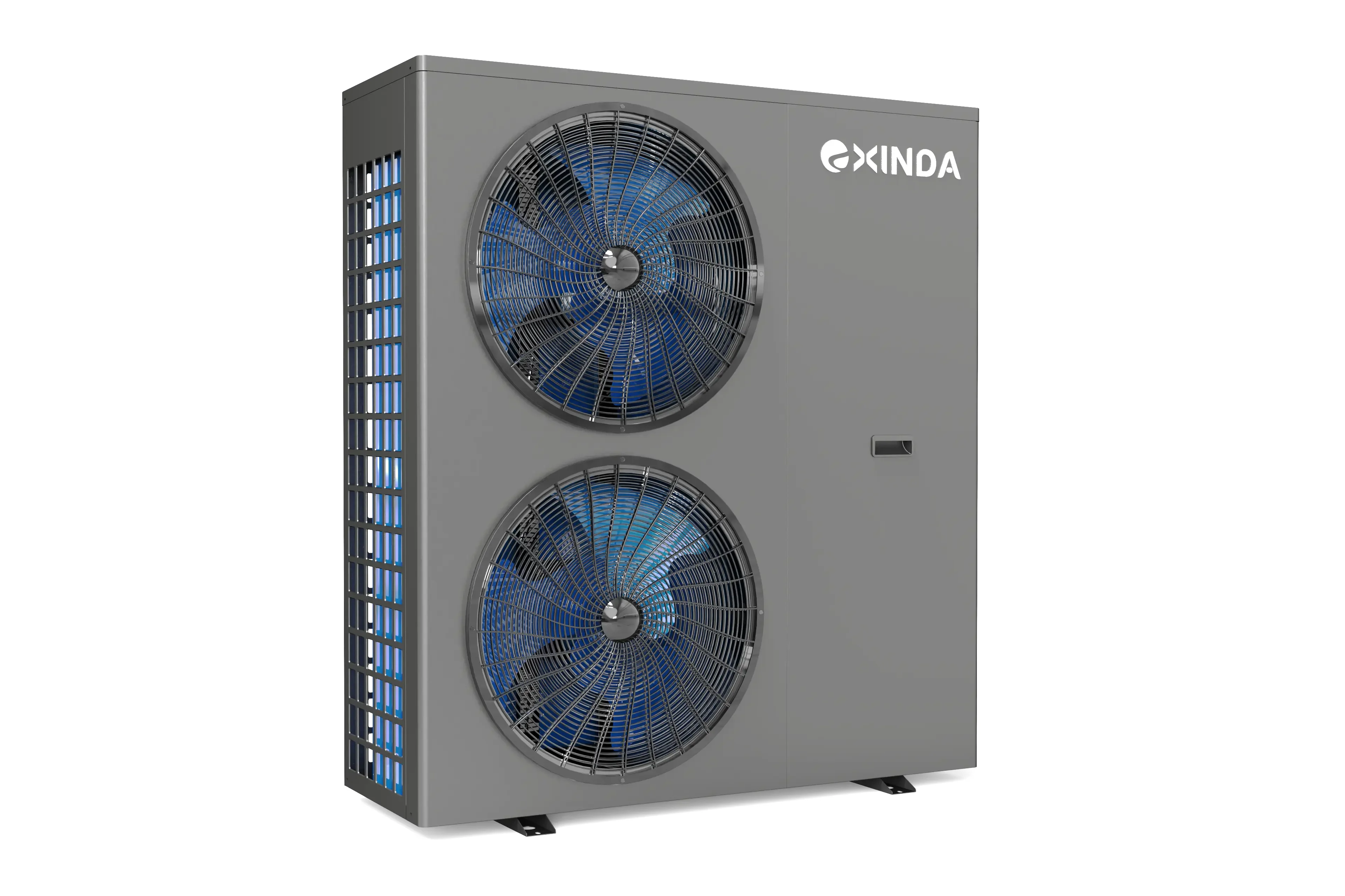
Exinda 24 Ton Inverter Commercial Heat Pump Chiller

Key specifications

01Heating and cooling capacity: approximately 85 kW (24 refrigeration tons)
02Inverter-driven compressors for continuous capacity modulation
03One unit replaces separate boiler and chiller systems
04Three-phase power supply for commercial and industrial infrastructure
05Integrates with fan-coils, AHUs, process water loops and district-heating networks
06European voltage adaptation available on request
07Designed for continuous duty with field-serviceable components

Product description

The Exinda 24 ton inverter commercial heat pump chiller is an air-to-water unit delivering approximately 85 kW of heating and cooling capacity for large hotels, office complexes, factories, schools and small district-heating loops. Inverter-driven compressors modulate capacity continuously to match the building's actual load, significantly reducing energy consumption compared to fixed-speed equipment, particularly during the partial-load hours that dominate real-world operation in large commercial buildings. The unit handles heating, cooling and process water production for hydronic distribution systems including fan-coils, air handling units (AHUs), underfloor heating and process loops. European voltage adaptation is available on request through EXINDA's EU service and engineering center in Italy. CENTRO-GAS, a Novi Sad industrial heating company with an in-house technical team, provides system specification, installation, commissioning and maintenance contracts. EXINDA provides factory-level support backed by a 60,000 m² facility, 90,000 units annual capacity, 100% in-line quality control, 5 enthalpy laboratories, and documented large-scale installations across Europe and North America.

More about this unit

Which buildings and applications does this unit serve?

The 24 ton commercial chiller serves large commercial, institutional and light industrial buildings where heating and cooling loads fall in the 60 to 100 kW range. Primary applications include: large hotels and hotel complexes (central heating, cooling and domestic hot water for 60 to 150+ rooms), office complexes and corporate campuses, factories and light industrial facilities requiring process heating or cooling below 100 °C, schools and university buildings, public and institutional buildings (hospitals, municipal centres), retail complexes and supermarkets, and small district-heating loops serving multiple buildings from a central plant. A hotel HVAC chiller at this scale replaces both the boiler plant and the cooling system with a single piece of equipment. For loads beyond 85 kW, multiple 24-ton units can operate in cascade, or the project may specify EXINDA's larger modular or water-cooled screw heat pump chiller platforms. EXINDA references at this scale include: a US school hot-water supply from air-cooled heat pump chillers and a Quebec ambulance station with heat pump plus gas boiler backup and radiant floor heating (both attributed to EXINDA).

How does it integrate with large-building hydronic systems?

At 85 kW, the unit serves as the primary thermal plant for the building or campus. The chiller produces hot or chilled water that feeds into the building's hydronic distribution network. Compatible systems include: fan-coil units in two-pipe or four-pipe configurations (hotels, offices), air handling units with heating and cooling coils (large open-plan spaces, schools, retail), underfloor heating in lobbies, ground-floor areas and radiant-floor applications, domestic hot water production via external plate heat exchangers or large storage tanks (300 to 1,000 L+), process heating and cooling loops for light industry (food preparation, laundry, pharmaceutical, textile applications below 100 °C), and district-loop distribution to multiple buildings via insulated underground piping. For buildings with simultaneous heating and cooling demand (hotels, mixed-use complexes), a four-pipe hydronic design, heat recovery configuration or thermal storage strategy should be specified at the design stage. CENTRO-GAS designs the complete hydronic integration as part of the project proposal.

What is the business case at this scale?

The financial case for a large commercial heat pump is built on four pillars. First, operating cost reduction: heat pumps deliver roughly 3 to 4 times more thermal energy than the electricity they consume, and at 85 kW, the absolute energy savings compared to a gas or oil boiler system are substantial. Second, capital consolidation: one unit replaces both a boiler and a chiller, reducing equipment cost, plant-room footprint, maintenance contracts and spare-parts inventory from two systems to one. Third, inverter efficiency: variable-speed compressors match output to load continuously, avoiding the wasteful on-off cycling of fixed-speed equipment. At partial loads (which dominate real operating profiles in hotels, schools and offices), energy consumption drops sharply. Fourth, ESG and compliance: zero on-site combustion, low-GWP refrigerant options and high seasonal efficiency support ESG reporting, green building certification and eligibility for public tenders. CENTRO-GAS prepares project-specific ROI analysis using the building's actual consumption data, tariff structure and existing plant condition, rather than generic projections.

Why inverter-driven compressors matter at 24 tons

Fixed-speed commercial chillers run at full capacity or shut off. At 24 tons, that means 85 kW cycling on and off as building load fluctuates, wasting energy on each start-up and creating temperature swings in the distribution water. The Exinda inverter commercial heat pump uses variable-speed compressors that continuously adjust output from minimum to maximum capacity. The practical consequences: energy consumption tracks actual demand rather than toggling between full power and zero, water temperature remains stable (critical for hotel comfort and process applications), compressor wear is reduced because start-stop cycles are minimised, and noise output drops during partial-load operation. At 24-ton scale, the efficiency gain from inverter control is larger in absolute terms than at 12 tons, because the gap between nominal capacity and typical operating point is wider in large buildings with variable occupancy.

Why CENTRO-GAS for large commercial heat pump projects?

A 24-ton heat pump chiller is a building-infrastructure decision, not a product purchase. CENTRO-GAS's value at this scale is the ability to engineer the complete system, not just deliver a unit. The company manufactures, installs and services industrial burners and heat systems, and applies that same engineering discipline to commercial heat pump projects. The offer includes: site survey and building load analysis, system specification including hydronic integration, buffer strategy and control architecture, installation by an in-house technical team with industrial heating experience, commissioning with documented performance verification against design parameters, and maintenance contracts with service-level commitments including response times. EXINDA provides the factory-backed platform: 60,000 m² facility, 90,000 units annual capacity, 100% in-line quality control, 5 enthalpy laboratories, climate testing from -35 °C to 60 °C, CE and ErP certification, over 100 patents, and an EU service and engineering center in Italy with dedicated engineers for European market support. For resellers serving commercial projects, CENTRO-GAS provides the technical depth behind the sale: system design support, commissioning assistance and after-sales backup that a reseller alone cannot replicate.

Technical specifications

Heating
Nominal heating capacity90 kW
COP at rated conditions3.62 - 4.47
SCOP (seasonal)4.82
Energy class, heatingA+++
Maximum flow temperature, heating60 °C
Cooling
Nominal cooling capacity72 kW
EER at rated conditions2.85 - 3.30
SEER (seasonal)4.61
Energy class, coolingA++
Chilled water temperature range7 - 27 °C
Domestic hot water / process water
Max. hot water temperature60 °C
DHW production methodExternal plate HX or storage tank
Refrigerant
Refrigerant typeR290 (Propane)
Refrigerant charge2 x 6.0 kg
GWP3
Electrical
Power supply380 - 400 V / 3ph / 50 Hz
Nominal power input7.32 - 24.72 kW
Max. input current (per phase)85 A (MCA)
Recommended circuit breaker106 A (MOP)
European voltage adaptationAvailable on request
Compressors
Compressor typeDC inverter EVI scroll
Number of compressors2
Capacity modulation range20 - 100 %
Built-in redundancyDual-circuit independent operation
Operating range
Outdoor temperature, heating-25 - 43 °C
Outdoor temperature, cooling-15 - 43 °C
Dimensions and weight
Unit dimensions (H x W x D)2256 x 2070 x 1160 mm
Operating weight800 kg
Hydraulic connections2-1/2 Flange
Noise
Sound power level Lw(A)69 dB(A)
Sound pressure level at 1 m65 dB(A)
Night / reduced-noise modeStandard (62 dB(A))
Controls and communication
Onboard controllerIntelligent Microcomputer
BMS protocolsModbus
Remote monitoringOptional WiFi / 4G
Cascade managementBuilt-in (up to 8 units)
Service access
Panel accessFront and side serviceable
Compressor replacementField-serviceable
Identifiers and compliance
Model codeFBMBHTF4B2E3
Warranty, unit5 years
Warranty, compressor10 years
CertificationsCE, ErP

System integration and installation requirements

System architecture overview

The 24-ton chiller serves as the primary thermal plant for a large building or multi-building campus. At 85 kW, it connects to the building's hydronic network via flow and return piping sized for commercial flow rates. A buffer tank or thermal store (500 to 2,000 L depending on system dynamics) is recommended for buildings with highly variable loads to prevent short-cycling and maintain stable supply temperatures. For multi-building campuses or small district loops, the unit feeds an insulated underground distribution network. The onboard controller manages compressor staging, defrost logic and flow temperature setpoints. Integration with a building management system (BMS) via Modbus allows centralised monitoring and energy metering. For projects requiring more than 85 kW, multiple 24-ton units can operate in cascade with coordinated staging to maximise system efficiency and provide redundancy.

Site requirements

  • Plant room or outdoor installation area: clearance for airflow volume (larger than 12-ton unit), service access on all sides and noise compliance with local regulations. Structural loading for rooftop installations must be verified by a structural engineer.
  • Electrical supply: 380 V three-phase, dedicated circuit, breaker 106 A (MOP). At approximately 85 kW, verify that the building's main electrical infrastructure (transformer, switchgear, cable runs) can accommodate the load, especially in retrofit projects. European voltage adaptation available on request.
  • Hydraulic connections: 2-1/2 inch flow and return, insulated, with vibration isolators at the unit. Commercial-grade pump groups and expansion vessels sized for the system volume.
  • Condensate management: commercial-grade drainage with freeze protection.
  • BMS connectivity: Modbus cabling to the building's control system.

Compatible distribution systems

Distrubution typeTypical supply temperatureApplication
Fan-coil units (2-pipe)7-12 °C cooling / 40-55 °C heatingHotels, offices, retail
Fan-coil units (4-pipe)Simultaneous heating and coolingHotels, mixed-use complexes
Air handling units (AHU)7-12 °C cooling / 40-55 °C heatingSchools, retail, open offices, factories
Underfloor heating30-40 °CLobbies, ground-floor areas, ambulance stations
DHW production50-65 °C via plate HX or tankHotels, restaurants, hospitals, schools
Process loopsApplication-dependentFood processing, laundry, textile, pharmaceutical
District-heating loop40-65 °CMulti-building campuses, small district networks

What is NOT included in delivery

  • Buffer tank / thermal store
  • Hydraulic distribution manifold and pump groups
  • Fan-coil units, AHUs or other terminal equipment
  • District-loop piping and insulation
  • BMS integration wiring and programming
  • Structural supports for rooftop installation
  • Electrical wiring from the distribution board to the unit
  • Installation and commissioning labour (quoted as part of the CENTRO-GAS project proposal)

Operating economics, compliance and procurement

Operating cost and ROI at scale

At 85 kW, the absolute operating cost difference between a heat pump chiller and a conventional boiler plus chiller system is substantial. Heat pumps deliver roughly 3 to 4 times more thermal energy than the electricity they consume. Inverter-driven compressors add a further efficiency layer by tracking the actual load curve rather than cycling at full power. For a large hotel or office complex, the combined savings on heating fuel, cooling electricity and maintenance (one system instead of two) can produce a compelling payback period, though the exact figure depends on the building's tariff structure, operating hours, existing equipment condition and climate zone. CENTRO-GAS prepares project-specific ROI analysis from actual consumption data. Generic payback claims are not offered.

Request a project-specific ROI analysis >

ESG, tender compliance and green certification

Zero on-site combustion eliminates CO, NOx and particulate emissions from the building's heating plant. Low-GWP refrigerant options, high seasonal efficiency and EU-standard certifications (CE, ErP) support ESG reporting frameworks, green building certifications (LEED, BREEAM or national equivalents) and public-tender eligibility where energy-efficiency documentation is required. For schools, hospitals and public buildings, this compliance documentation can be decisive in the procurement process. CENTRO-GAS provides the technical compliance package.

Ask about compliance documentation >

Procurement, lead times and project delivery

The 24-ton chiller is available through CENTRO-GAS as a project-based quotation covering system design, the unit (with or without European voltage adaptation), installation, commissioning and a maintenance contract. Lead times depend on configuration and are confirmed at the quotation stage. For projects involving public tenders, CENTRO-GAS can provide the technical documentation required for the submission. For resellers bidding on commercial projects, CENTRO-GAS provides system design support, project-specific pricing and commissioning assistance. EXINDA's factory capacity of 90,000 units per year ensures supply reliability even for multi-unit orders.

Contact the commercial team >

Frequently asked questions about this unit

01

What building size and type does a 24-ton chiller cover?

A 24-ton (approximately 85 kW) unit covers large commercial and institutional buildings with heating and cooling loads in the 60 to 100 kW range. Typical examples: large hotels (60 to 150+ rooms), office complexes of 1,500 to 4,000 m², schools and university buildings, factories, hospitals and retail complexes. For loads above 85 kW, multiple units in cascade or EXINDA's larger modular platforms are available. CENTRO-GAS provides a load calculation as part of the project proposal.

02

Can it replace a large boiler plant in a hotel or office building?

Yes. The unit connects to existing hydronic distribution and replaces the boiler with a heat pump that also provides cooling, eliminating the need for a separate chiller. A retrofit assessment determines compatibility of existing piping, pump groups and terminal equipment with the heat pump's flow temperature range. EXINDA references include a US school hot-water system and a Quebec ambulance station with heat pump plus gas boiler backup (both attributed to EXINDA). CENTRO-GAS has industrial heating expertise on both the boiler and the heat pump side, which is critical for phased retrofits where old and new systems must coexist during the transition.

03

What is the advantage of inverter compressors at this capacity?

Fixed-speed compressors at 85 kW cycle between full output and off, wasting energy on each start and creating temperature fluctuations in the distribution water. Inverter-driven compressors modulate continuously from minimum to maximum capacity, tracking the building's actual load. At partial loads (which dominate hotel and office operating profiles), energy consumption is sharply lower. Compressor wear is also reduced because start-stop cycling is minimised.

04

Can it serve a district-heating loop for multiple buildings?

Yes. The unit can feed insulated underground piping to distribute hot or chilled water to multiple buildings on a campus or in a small district network. System design at this scale requires careful hydraulic engineering (pipe sizing, pump groups, pressure management, thermal losses), which CENTRO-GAS provides as part of the project proposal.

05

What refrigerant does it use?

The unit uses R290 (Propane) refrigerant, which has a very low Global Warming Potential (GWP) of 3. Confirm the specific charge with CENTRO-GAS when requesting a project quotation.

06

Is European voltage adaptation standard?

European voltage adaptation is available on request and coordinated through EXINDA's EU service and engineering center in Italy. Confirm lead time and specifications with CENTRO-GAS when specifying the project.

07

Does it work in Serbian winters at -15 °C to -20 °C?

EXINDA tests its commercial range in climate chambers down to -35 °C. The unit is certified for operation at outdoor temperatures as low as -25 °C. EXINDA's large cascade installations in northern China have operated stably at -25 °C to -40 °C since 2010 (attributed to EXINDA). For critical heating applications, a hybrid configuration with a backup boiler is a proven approach.

08

Can multiple units operate in cascade?

Yes. Multiple 24-ton units can be staged and managed through the onboard controller's cascade function, distributing load across units for optimal efficiency and providing redundancy if one unit requires service. CENTRO-GAS designs cascade systems as part of its engineering service.

09

What service and maintenance does it require?

Commercial heat pump chillers at this scale require periodic inspection: compressor health monitoring, refrigerant pressure and charge verification, heat exchanger cleaning, electrical and control system checks, and vibration analysis. CENTRO-GAS offers maintenance contracts with defined service levels, including response-time commitments. The unit is designed with field-serviceable compressors and front and side panel access for component replacement without disrupting adjacent equipment.

10

Can resellers bid on projects with this unit?

Yes. CENTRO-GAS holds exclusive EXINDA distribution for Serbia and supports resellers on commercial project bids. The support includes: system design assistance (CENTRO-GAS engineers the solution, the reseller presents it to the end customer), project-specific pricing, commissioning support, and after-sales backup. Commercial projects represent higher-value opportunities for resellers, and CENTRO-GAS provides the technical depth that makes the bid credible. Contact the CENTRO-GAS commercial team for reseller terms and project support.