Phone icon+381 21 518 887

Commercial air-to-water heat pumps & chillers

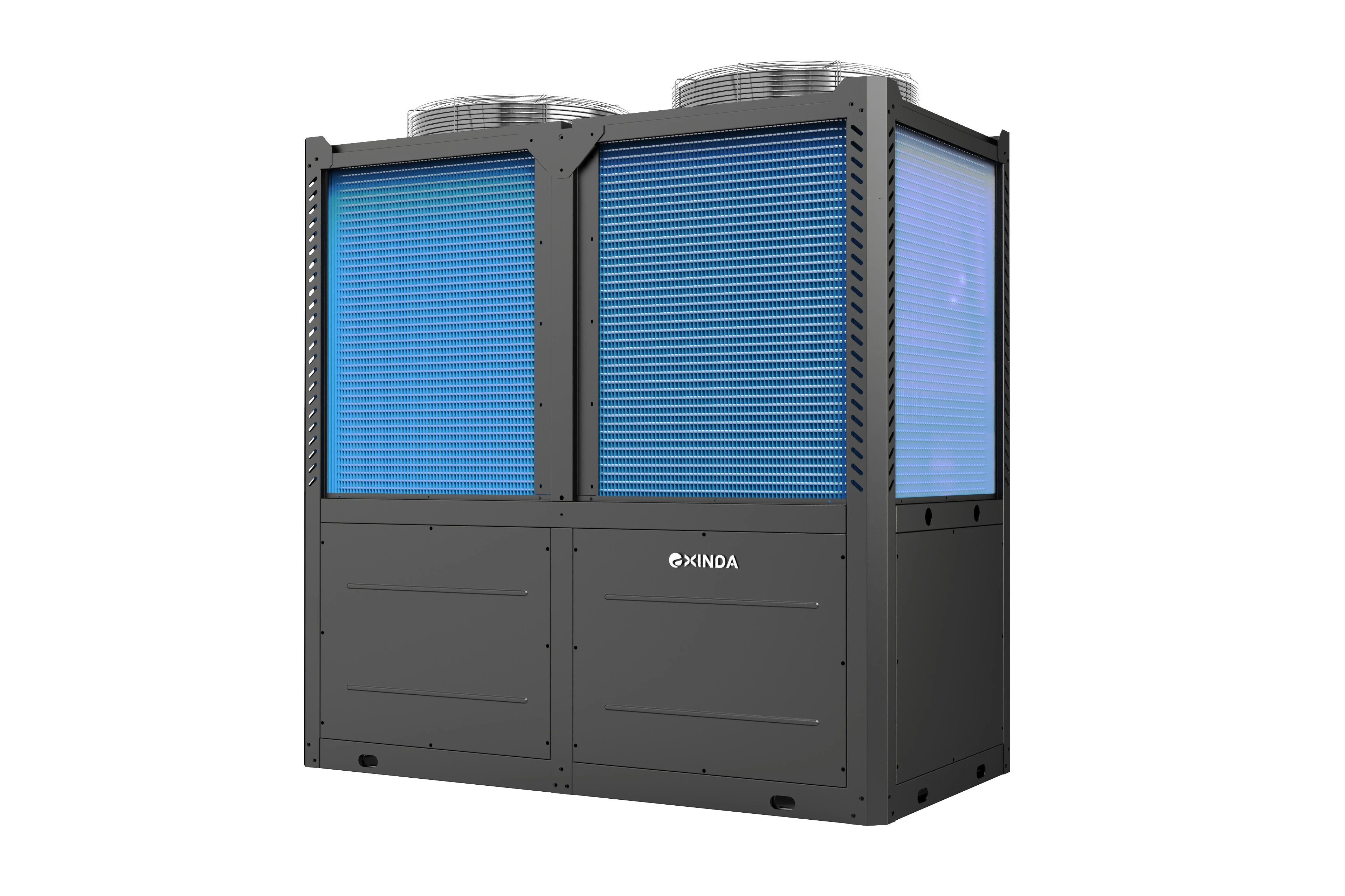
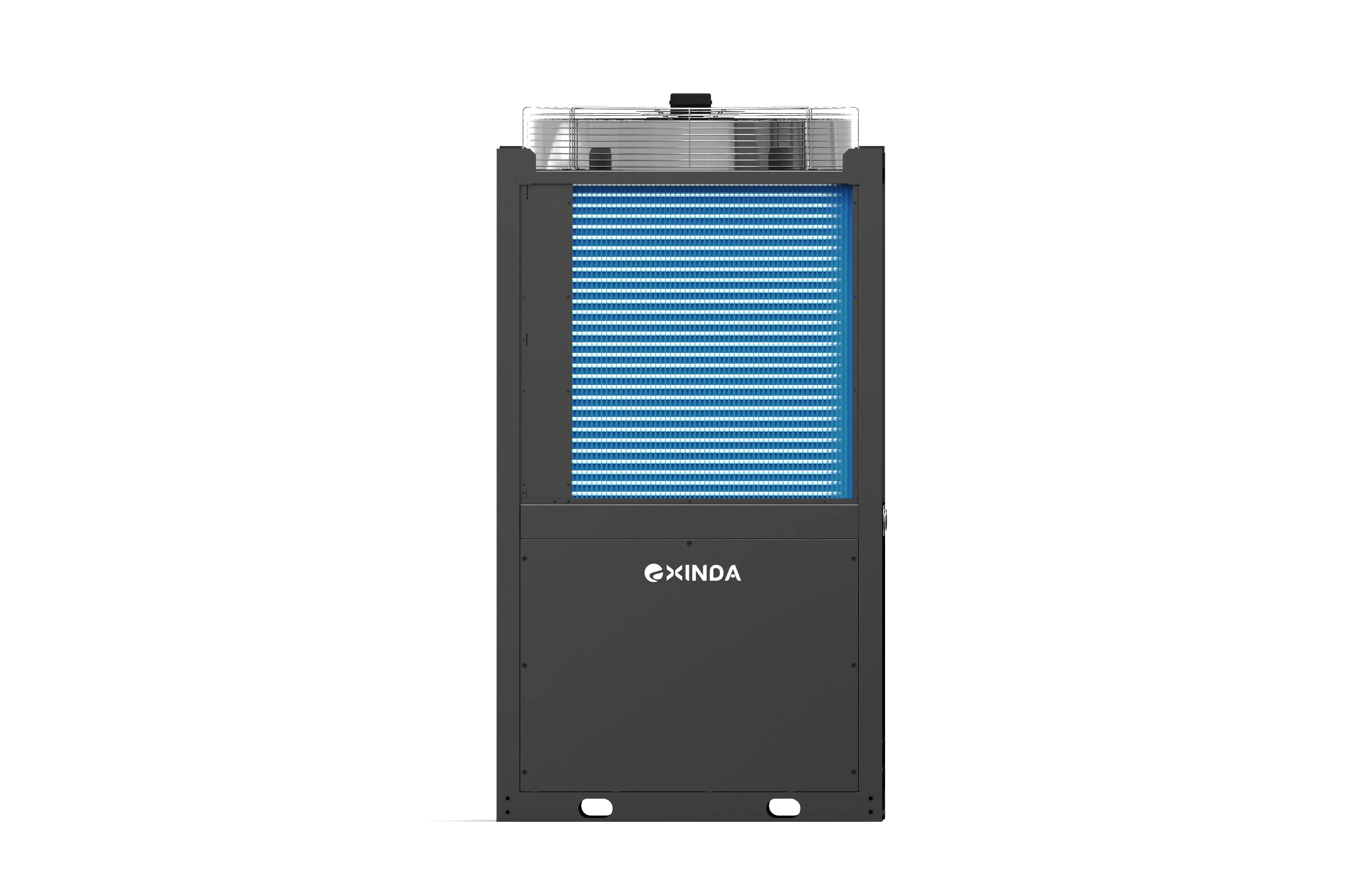
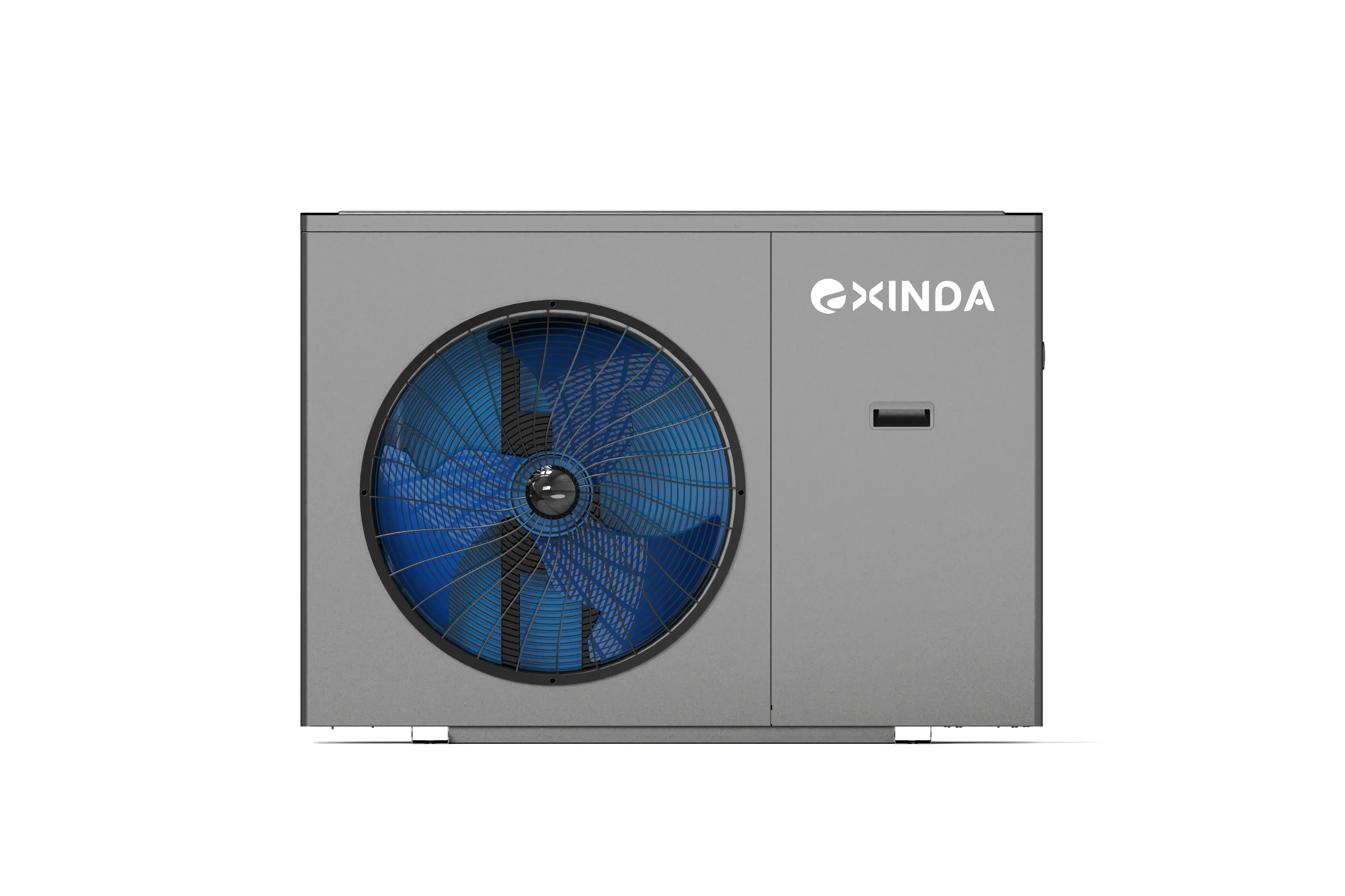
A commercial air-to-water heat pump is a central plant system that provides heating, cooling and domestic hot water for buildings such as hotels, offices, factories, schools and hospitals, delivering roughly 3 to 4 times more thermal energy than the electricity it consumes. Centro-Gas supplies Exinda inverter heat pump chillers in 12-ton and 24-ton capacities, designed for continuous duty in European climates with operating ranges from minus 25 °C to 43 °C. Both units integrate with hydronic distribution loops including fan coils, air handling units, underfloor heating and DHW tanks. European voltage adaptation is available on request.

Compare commercial models

Specification12-ton24-ton
Nominal heating capacity~45 kW~90 kW
Nominal cooling capacity~42 kW~84 kW
Compressor typeInverter scroll with EVIInverter scroll with EVI
RefrigerantR32R32
Power supply380 V / 3ph / 50 Hz380 V / 3ph / 50 Hz
Operating range (heating)-25 °C to +43 °C-25 °C to +43 °C
Voltage adaptationStandard EUEU adaptation on request
Cascade configurationYesYes
Typical applicationsHotels, offices, clinics, restaurants, light industryLarge hotels, office complexes, factories, schools, small district loops
AvailabilityIn stockIn stock
Details >Details >

Guide: how to select a commercial air-to-water heat pump

How is capacity determined for a commercial building?

Commercial heat pump sizing begins with the building's thermal load, not its floor area alone. The load calculation accounts for the building envelope (wall and roof insulation, glazing area and type), internal heat gains (occupancy, lighting, equipment), ventilation requirements, hot water demand profiles and the local climate data for heating and cooling design days. For a hotel, the domestic hot water load can dominate the sizing because of high simultaneous demand from guest rooms. For an office building, cooling loads in summer often set the equipment capacity. A restaurant or food production facility adds process heat and high ventilation rates to the equation. Centro-Gas prepares a project-specific load analysis using the building's actual consumption data or design parameters, because the correct starting point is always the building, not the catalogue. The 12-ton Exinda chiller suits mid-scale applications such as a boutique hotel, a medium office building or a clinic. The 24-ton unit addresses larger buildings or higher simultaneous heating and cooling demand. For buildings that exceed the capacity of a single unit, cascade configurations allow multiple units to operate as a coordinated plant.

Retrofit or new construction: what changes?

In new construction, the heat pump is specified as the primary plant from the design stage. The hydronic distribution, electrical supply, plant room layout and control strategy are all designed around it. This is the simplest scenario because there are no legacy constraints. Retrofit is more common in Serbia's commercial building stock, and it introduces additional variables: the existing distribution system (radiator loops designed for high flow temperatures, fan coil networks, mixed systems), available plant room space, electrical capacity, and the need to maintain building operations during the transition. EXINDA has documented retrofit projects including a commercial boiler room replacement in Milano where gas boilers were replaced with air-to-water heat pump chillers while maintaining occupant comfort (EXINDA reference). Centro-Gas brings industrial heating retrofit experience from years of burner and heat system work. A phased approach, replacing boilers in stages while keeping redundancy, is standard practice for critical buildings.

Hydronic system integration: fan coils, AHUs, underfloor and DHW

Commercial heat pump chillers connect to the building through a hydronic loop. The distribution side determines both the system design and the operating efficiency. Fan coil units are the most common terminal in hotels and offices. They accept low flow temperatures efficiently, making them an excellent match for heat pump operation. Air handling units with heating and cooling coils serve larger zones and can integrate with the building's ventilation system. Underfloor heating in commercial spaces (lobbies, retail floors, warehouses) operates at the lowest flow temperatures and delivers the highest seasonal efficiency. Domestic hot water in commercial buildings (hotels, hospitals, sports facilities) requires higher temperatures, typically 55 to 60 °C at the tank. The Exinda chillers can produce these temperatures while the inverter compressor modulates output to match the varying load profile throughout the day. Centro-Gas specifies the complete hydronic system, not just the heat pump unit. Buffer tanks, pump groups, expansion vessels, mixing valves and controls are part of the system design. The hydraulic accessories category on this site covers these components.

ROI and total cost of ownership for commercial heat pumps

The investment case for a commercial heat pump rests on three factors: the reduction in energy consumption (driven by the 3 to 4 times efficiency advantage over combustion boilers), the reduction in maintenance costs (no flue systems, no gas safety infrastructure, fewer moving parts in inverter-driven equipment) and the potential access to subsidies or green financing. Payback periods depend entirely on the building's energy profile, local utility tariffs and the system being replaced. A building replacing an ageing oil boiler in a region with high oil prices will see a different payback than one replacing a relatively new gas boiler on a favourable gas tariff. Generic payback claims are unreliable because they ignore these variables. Centro-Gas prepares project-specific ROI analyses grounded in the client's actual consumption data. The analysis models annual energy costs under the current system against projected costs with the heat pump plant, using real local tariff structures. This is the only honest way to present payback, and it is what investment committees and tender evaluators expect.

Hybrid systems: heat pump plus backup boiler

A hybrid configuration pairs a heat pump with a combustion boiler. The heat pump carries the base load and operates whenever outdoor temperatures allow efficient operation. The boiler activates during extreme cold peaks or when the heat pump alone cannot meet the instantaneous demand. This architecture is legitimate and often the most practical approach for critical buildings (hospitals, care homes, emergency services) and for retrofits where the existing boiler still has useful life. EXINDA has a documented hybrid installation at a Quebec ambulance station where the heat pump provides primary heating with radiant floor distribution, and a gas boiler serves as backup for extreme cold conditions (EXINDA reference). Centro-Gas is uniquely positioned for hybrid designs because its core business is industrial burners and heat systems. The same company that specifies the heat pump already understands the boiler side of the system, the controls integration and the switchover logic. Few competitors can offer both halves of a hybrid design from a single engineering team.

ESG compliance and green building standards

Commercial heat pumps support ESG reporting and green building certification through three mechanisms: zero on-site combustion (eliminating direct CO2, NOx and particulate emissions from the building), the use of low-GWP refrigerants (R32 in the Exinda commercial range, with a GWP of 675 compared to 2,088 for R410A) and the 3 to 4 times efficiency factor that reduces total energy consumption per unit of useful heat. For organisations responding to EU-aligned energy efficiency directives, public tenders with green criteria or investor ESG expectations, a heat pump plant provides documented, reportable improvements. The energy class ratings, refrigerant data and emissions reduction calculations are the type of evidence that compliance frameworks require. As Serbia progresses in its EU accession process, green building standards and energy performance requirements for commercial buildings are tightening. Equipment decisions made today will operate for 15 to 20 years. Specifying a heat pump system now avoids the risk of operating a non-compliant plant later.

Application reference: which capacity for which building type?

This table provides orientation only. Correct sizing requires a load calculation based on the building's specific envelope, usage profile and climate zone. Centro-Gas prepares project-specific proposals with ROI analysis.

Building typeTypical heating demandRecommended modelNotes
Boutique hotel (20 to 40 rooms)Medium heating + high DHW12-tonDHW demand profile is the sizing driver
Medium office building (1,000 to 3,000 m²)Balanced heating and cooling12-tonCooling load may dominate in summer
Restaurant or large retailModerate heating + high ventilation12-tonKitchen ventilation adds to the load
Clinic or medical centreContinuous heating + DHW12-ton or 24-tonRedundancy planning is critical
Large hotel (50+ rooms)High heating + very high DHW24-ton or cascadeMultiple units for redundancy and part-load efficiency
Office complex (3,000+ m²)Large heating and cooling plant24-ton or cascadeIntegration with existing AHU and fan coil networks
Factory or warehouseVariable process and space heating24-tonConsider hybrid configuration for process backup
School or public buildingSeasonal heating + moderate DHW12-ton or 24-tonSubsidy eligibility for public energy efficiency tenders
Small district heating loopMulti-building central plant24-ton cascadeLoad diversity across buildings improves efficiency

Frequently asked questions about commercial heat pumps

01

What is the difference between a heat pump chiller and a conventional chiller?

A conventional chiller produces chilled water for cooling only and typically rejects its waste heat to the outdoor air through a condenser. A heat pump chiller reverses this cycle: in heating mode it extracts heat from outdoor air and delivers it to the building's hydronic loop as useful heating. In cooling mode it operates like a conventional chiller. This dual function means one piece of central plant replaces both a chiller and a boiler, reducing equipment count, plant room space and maintenance complexity.

02

Can these units handle the full heating load in Serbian winters?

The Exinda commercial chillers are rated for operation down to minus 25 °C. EXINDA has cold-climate installations running in northern China at minus 25 °C to minus 40 °C conditions (EXINDA reference). Serbia's continental climate, with typical winter design temperatures around minus 15 °C to minus 18 °C, falls well within the operating envelope. For critical buildings where any interruption is unacceptable, a hybrid configuration with a backup boiler provides an additional layer of security during the coldest hours of the year.

03

How does inverter technology benefit commercial applications?

Inverter-driven compressors modulate their output continuously to match the building's actual heat or cooling demand at any given moment. This avoids the energy waste of fixed-speed compressors that cycle on and off at full capacity. In commercial buildings, where loads vary significantly throughout the day (morning warm-up, midday cooling, evening reduction), inverter operation delivers measurably higher seasonal efficiency and more stable supply temperatures. It also reduces mechanical wear, which extends equipment life.

04

What electrical infrastructure is required?

Both the 12-ton and 24-ton models require three-phase 380 V / 50 Hz power, which is standard for commercial buildings in Serbia. The specific electrical supply capacity (amperage, cable sizing, protection) depends on the unit's maximum power draw and should be coordinated with the building's electrical engineer during the design phase. For the 24-ton model, European voltage adaptation is available on request to match local grid specifications where standard parameters differ.

05

How do cascade configurations work for larger buildings?

When a single unit does not cover the full building load, multiple units can be installed in a cascade arrangement. The cascade controller manages staging: it brings units online and offline based on demand, distributing run hours evenly and maintaining part-load efficiency. This approach also provides built-in redundancy. If one unit is offline for maintenance, the remaining units continue to serve the building at reduced capacity. Cascade configurations are common in larger hotels, office complexes and small district heating networks.

06

What maintenance does a commercial heat pump require?

Routine maintenance includes inspection and cleaning of the air-side heat exchanger, verification of refrigerant pressures and compressor operation, checking the hydronic circuit (pumps, valves, expansion vessel, water quality), testing control settings and safety devices, and reviewing operating data logs. The maintenance schedule is less intensive than for combustion boilers (no flue systems, no gas safety inspections). Centro-Gas offers commercial service contracts with defined response times and preventive maintenance intervals.

07

Can these units provide simultaneous heating and cooling?

The standard configuration provides either heating or cooling to the building at any given time, with the reversing valve switching between modes. Buildings that require simultaneous heating and cooling in different zones (for example, heating the north-facing offices while cooling the south-facing conference rooms) typically address this through the hydronic distribution design: a four-pipe system with separate heating and cooling loops, or dedicated units for each function. Contact Centro-Gas to discuss the system architecture for your specific building.

08

What noise levels should we expect for urban installations?

Noise levels depend on the unit capacity and the specific installation conditions (mounting surface, proximity to reflective walls, number of units). The Exinda commercial chillers use EC fans designed for reduced noise output. For urban installations where noise regulations are strict (hotels, residential-adjacent offices), acoustic assessment is part of the project engineering. Measures such as acoustic barriers, vibration-isolating mounts and strategic unit placement can bring noise levels within local limits. Centro-Gas addresses noise during the site assessment.

09

What certifications do these units carry?

The Exinda commercial heat pump chillers carry CE marking for the European market and ErP compliance for energy-related products. EXINDA's production facility maintains 100% in-line quality control across an annual capacity of 90,000 units, with testing in 5 enthalpy laboratories covering conditions from minus 35 °C to 60 °C (EXINDA reference). EXINDA also holds Keymark and MCS certifications across its product range. Specific certification details per model are available in the technical submittals on each product page.

10

Who handles system specification and integration design?

Centro-Gas provides end-to-end project support: load calculation, equipment selection, hydronic system design, electrical coordination, installation, commissioning and ongoing maintenance contracts. This is not a box sale. Centro-Gas is an established industrial energy company that manufactures, installs and services industrial burners and heat systems, and brings that system-engineering approach to commercial heat pump projects. EXINDA's EU service and engineering centre in Italy provides additional factory-level technical support for complex applications (EXINDA reference).